





Home About us Contact Sitemap
Catalogs


bullet
O País
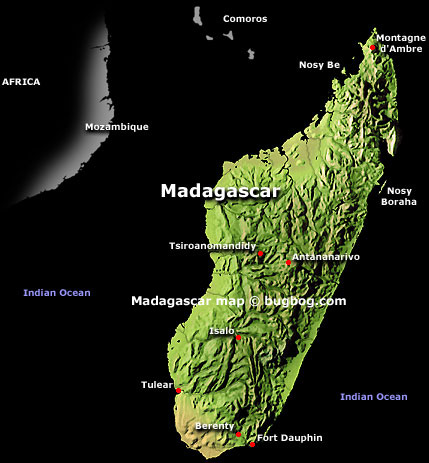
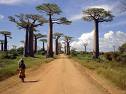
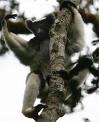
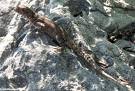
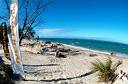
Madagáscar ocupa toda a ilha de Madagáscar, de longe a maior ilha de África e uma das maiores do mundo, e um número relativamente reduzido de ilhas adjacentes. A capital Antananarivo, tem uma area total de 587,040 km² do quais 581,540 km² composta por terra firme e 5,500 km² de águas. O país é banhado pelo canal de Moçambique a oeste e pelo oceano Índico. O relevo é em geral montanhoso, em especial na parte oriental, com dois grandes maciços a norte (onde se situa o monte Maromokotro, o mais alto do país com os seus 2 876 m. O pais possui cinco porcento das especies de plantas e animais do mundo inteiro, oitenta porcento das quais originárias do Madagascar. Para alem da notável biodiversidade, destacam-se também os primatas e as familias de embondeiros.


Capital Antananarivo
Official languages Malagasy, French, English
Government Republic
President Marc Ravalomanana
Independence 26 June 1960
Area 587,040 km²
Population 17,501,871 (est 2004)
Density 31/km²
GDP Total $16,323 million (est 2005)
HDI 0.499 (2003)
Currency Malagasy Ariary (MGA)
Time zone UTC+3
Internet TLD .mg
Calling code + 261
Malagasy motto Tanindrazana, Fahafahana, Fandrosoana
(Fatherland, Liberty, Progress)
Anthem Ry Tanindraza nay malala ô (Oh, Our Beloved Fatherland)


bullet
bullet Governo


Governo da República de Madagascar

Prime Minister,Head of Government :

 
Ministers, Deputy Ministers and Secretaries of State :
Minister of Interior, cumulatively with his functions as Prime Minister, Head of Government:
 

Minister in the Presidency Responsible for Decentralization and Country Planning:
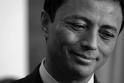
 
Minister of National Defence:
Minister of Justice:
Minister of Public Administration,Labor and Social Legislation:
Minister of Finances and Budget:
Minister of Environment, Waters and Forests:
Minister of Foreign Affairs:
Minister of Health and Family Planning:
Minister of National Education and Scientific Research:
Minister of Agriculture, Stockbreeding and Fishery:
Minister of Sports:
Minister of Telecommunication, Posts and Communication:
Minister of Public Works and Meteorology:
Minister of Economy,Planning, Private Sector, and Trade:
Minister of Transport and Tourism:
Minister of Energy:
Minister of Mining:
Deputy Minister of Education, Responsible of Tertiary Education:
Deputy Minister of Agriculture, Stockbreeding and Fishery:
Secretary of State Responsible for Public Security:
Secretary of State for Culture, and Leisure:
The above members of the Cabinet are ranked as follow:
 
1-Ministers in the Presidency;
2-Ministers according to their age;
3-Deputy-Ministers according to their age;
4-Secretaries of State according to their age

 
  •  

     
    bullet
    S.Excia. O Presidente da República de Madagáscar
    Marc Ravalomanana


    bullet
    bullet Negócios


    Comércio Internacional da Madagascar
     
    Madagascar oferece produtos de qualidade internacional para exportar.
    Compradores podem contactar directamentes a(s) companhia(s) cujos produtos os interessam ou nos podem contactar para fornecermos a lista de companhias que possuem os produtos nos quais estão interessados.
    bulletEconomia
     
    A economia da Madagascar é baseada na agricultura. Porém há outros sectores que desempenham um papel muito importante para o país. Eles são: o tourismo,a pesca, a indústria e os serviços.
    GDP 1998 1999 2000
    Agricultura 33.5 % 33.1 % 31.8 %
    Indústria 11.9 % 11.8 % 12.5 %
    Serviços 47.9 % 48.4 % 48.5 %
    Fonte: Banco Central da Madagascar

     
    Various economic reforms were brought by the government in order to promote an attractive environment for the investment (reforms of the financial sector, privatisation, facilitation of foreign exchanges, etc.). Madagascar knows an economic growth rate (5% into 2000) largely exceeding the demographic growth rate (2,8%).
    Ano 1999 2000 2001 2002 2003 2004
    Crescimento GDP 4.5 % 4.8 % 5% -11.9 % 6% 5%
    Fonte: CIA World Factbook

     
    The recent political crisis which took place in Madagascar caused a serious disorganization of the economic and social life. The free movement of goods and people were blocked. It resulted in the slowing down of the economy which involved redundancies and even the closure of companies, the rocketing of prices related to the shortage of many essential food products and fuel. All sectors were concerned, the negative growths recorded rise to -25% in the secondary industry, -12,5% in the tertiary sector. The agricultural production recorded a fall of - 1,4%.

    Inflation continues to slow down. The annual Slip of the consumer price index is only 11,4% in February 2003, whereas it was more than 26,5% in May 2002. During January and February 2003, the Monthly index variations (respectively 0,3% And 1,3%) were weaker than those of the former years (respectively 1,5% and 1,9% in 2002 and 1,7 and 2,3% in 2001).

    The emergency measures taken by the Government made it possible to mitigate the devastators effects of the crisis. Among these measurements, one note the fall by two times of the intervention rate of the Central Bank and the exemption from customs duties and import taxes on construction material, inputs and textile equipments, agriculture and the livestocks, as well as the increase of the salaries of the government officials. Gradually, sign of return to the normal of the economic activities are seen, in fact the inflation rate of 26,7% at least in May 2002 was brought back to 11% in February 2003. Following the various measures taken by the Government, if the rate of the economic growth was -12% for year 2002, it should reach 8% this year.

    Madagascar is highly appreciative of the support and generosity of its partners and friends who are concerned for the country and want to see the socio-economic situation improved. At the "Conference of the Friends of Madagascar" held in Paris in July 2002, our economic and financial partners pledged about US$2.477 billion for a four year period. These pledges came from the World Bank, the European Union, the African Development Bank, as well as other multilateral and bilateral partners of Madagascar.

    implemented over the period 2002 to July 2003, financed partly by a credit of the World Bank. This program comprises three components: - assistance for the most vulnerable through interventions in health, education and rural development sectors and within the framework of a security net program, - revival of private sector activities by allocation of cash-flow support to firms - restoration of the public sector through the modernization of the land transport network, the restructuring of the air transport system, the rehabilitation and the maintenance of roads and the rebuilding of the bridges as a priority.
     
  •  
    copyright 2008 Mozhost.com

